Introduction
Chikankari clothing combines traditional Indian craftsmanship with opportunities in ethnic fashion, online retail, boutique sales and wholesale garment supply. Entrepreneurs can begin by selling a small collection online, sourcing finished garments from Lucknow, developing their own label, supplying boutiques or eventually coordinating production.
The key is to start with a validated product range, understand the cost of handmade embroidery, and avoid investing heavily in inventory before customer demand is clear. The figures below distinguish reported sector data from illustrative business assumptions.
1. Is a Chikankari clothing business a good opportunity?
Indicator |
Reported figure |
Important context |
India handicraft exports, FY 2024–25 |
₹33,122.79 crore |
Excludes hand-knotted carpets; broader sector |
Embroidered and crocheted goods exports, FY 2024–25 |
₹4,350 crore |
Broader export category; not Chikankari-only |
Cotton preference in a Lucknow-focused study |
70.9% |
Local study result, not national market share |
Women trained by one documented master artisan |
500+ |
A local example reported by PIB in March 2026 |
India’s handicraft exports excluding hand-knotted carpets increased from ₹20,082.53 crore in FY 2014–15 to ₹33,122.79 crore in FY 2024–25, an increase of approximately 64.9% over ten years (about 5.1% annualized). This is broader handicraft data, not Chikankari-specific sales.
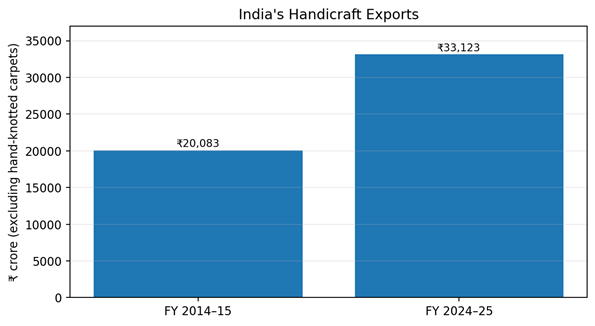
Figure 1. India's handicraft exports excluding hand-knotted carpets. Source: Press Information Bureau, Government of India.
A Lucknow-focused research paper cites historical estimates of approximately ₹2,000 crore in annual turnover and 50,000 people involved in the sector. These are older secondary estimates and should not be treated as verified current national market statistics.
2. Choose your business model
Online reseller: Buy finished garments and sell through Instagram, WhatsApp, marketplaces or a website. Useful for testing demand.
Own clothing brand: Develop product selection, labels, packaging and positioning; sell directly to customers.
Wholesale supplier: Supply boutiques, resellers and online brands; requires reliable repeat orders and working capital.
Manufacturing and artisan network: Coordinate fabric, stitching, embroidery, quality checks and production schedules.
Recommended starting approach: test a small online collection or reseller model first. Move into custom manufacturing after identifying repeat-selling designs and understanding demand.
3. Which products should you sell?
A 2025 Lucknow-focused study reported cotton at 70.9% and georgette at 14.6% of the fabric preferences it recorded. The remaining 14.5% is calculated as the unallocated remainder; it was not separately identified as one fabric. These figures are sample-specific and should not be presented as national market shares.
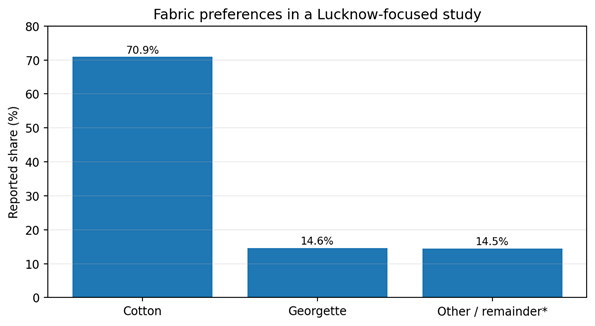
Figure 2. Fabric preferences in a Lucknow-focused study. Other/remainder is calculated.
Product |
Potential customer |
What to test |
Cotton kurtis |
Everyday ethnic-wear buyers |
Fit, colour, price and comfort |
Kurta and pant sets |
Office and casual wear customers |
Complete-set value and sizing |
Premium suits |
Festive and occasion-wear buyers |
Embroidery detail and willingness to pay |
Dupattas |
Accessory and gift buyers |
Design, fabric and price point |
Contemporary co-ords |
Fashion-led online shoppers |
Silhouette, styling and conversion |
For a first launch, consider testing 12–20 designs with limited quantities, subject to supplier minimums. Reorder proven sellers rather than buying deeply into every style.
4. Where to source Chikankari garments
Lucknow and surrounding artisan networks are natural starting points for sourcing research because Chikankari is strongly associated with the region. Potential routes include wholesalers, manufacturers, master artisans, artisan groups, garment units and handicraft exhibitions.
Before placing a large order, check:
·Whether embroidery is handmade, machine-made or a combination.
·Fabric composition, colourfastness, shrinkage and finishing.
·Stitching, size consistency and sample quality.
·Price by quantity, minimum order quantity and lead time.
·Defect, replacement and cancellation terms.
·Invoices, supplier identity, payment terms and repeat-production capacity.
5. How much investment is needed?
The following are illustrative planning scenarios for an online launch, not published industry averages or supplier quotes.
Expense |
Lean test launch |
Small own-brand launch |
Initial inventory and samples |
₹20,000 |
₹60,000 |
Branding, labels and packaging |
₹5,000 |
₹12,000 |
Photography and content |
₹3,000 |
₹10,000 |
Website and selling tools |
₹3,000 |
₹8,000 |
Initial marketing |
₹8,000 |
₹20,000 |
Shipping, returns and operating buffer |
₹6,000 |
₹15,000 |
Contingency |
₹5,000 |
₹15,000 |
TOTAL |
₹50,000 |
₹1,40,000 |
These scenarios assume outsourced production and no rented retail shop or industrial machinery. Actual costs can vary substantially. Keep working capital available because unsold inventory may not be converted to cash quickly.
6. Product pricing and contribution margin
Illustrative unit economics for one kurti sold directly online: selling price ₹1,499; garment cost ₹600; packaging ₹40; shipping subsidy ₹80; payment and selling fees ₹45; advertising cost per order ₹200; returns and defect allowance ₹75.
Item |
Amount |
Selling price |
₹1,499 |
Total assumed variable costs |
₹1,040 |
Contribution per order before fixed overheads and applicable taxes |
₹459 |
Contribution margin |
30.6% |
Contribution = selling price minus variable costs = ₹1,499 − ₹1,040 = ₹459. These are illustrative assumptions, not observed market averages. The returns allowance is a provision, not necessarily a cost incurred on every order.
If monthly fixed expenses are ₹30,000, break-even is approximately ₹30,000 ÷ ₹459 = 66 orders per month, assuming the contribution per order remains constant and excluding omitted costs or tax effects.
Orders per month |
Total contribution at ₹459/order |
30 |
₹13,770 |
50 |
₹22,950 |
66 |
₹30,294 |
100 |
₹45,900 |
7. Marketing and sales channels
Instagram and short-form video: Show embroidery close-ups, fit, styling and fabric details; use clear product codes and prices.
WhatsApp Business: Maintain a catalogue, order confirmations and delivery updates. Obtain consent for promotions and respect opt-outs.
Own website: Provide size charts, fabric information, care instructions, shipping policies and a transparent returns policy.
Marketplaces: Check commissions, advertising costs, return rules and seller eligibility before listing large quantities.
Boutique and wholesale partnerships: Offer a concise catalogue, wholesale prices, sample policy, minimum quantities and delivery terms.
8. 90-day launch plan
Days 1–15: Research and sourcing
·Choose target customer and business model.
·Contact 5–10 potential suppliers and compare quotes.
·Inspect samples and shortlist 12–20 designs.
·Prepare a product-costing sheet.
Days 16–30: Product and brand setup
·Finalize products, labels, packaging and photos.
·Prepare descriptions, size charts and policies.
·Set prices and calculate contribution margins.
·Set up sales channels and customer service.
Days 31–60: Launch and test
·Launch a limited collection.
·Publish product and styling content.
·Run small marketing tests with spending limits.
·Track orders, conversion, returns and contribution.
Days 61–90: Optimize
·Reorder products with proven demand.
·Pause weak products or poor-margin campaigns.
·Improve fit, product pages and delivery reliability.
·Review cash flow and plan the next 90 days.
9. Registration and compliance checklist
·Choose a suitable business structure and name.
·Maintain purchase invoices, sales records and expense tracking.
·Check GST registration and invoicing obligations for your specific sales model.
·Check consumer-protection, product-description, returns and e-commerce obligations.
·Consider trademark protection for your brand.
·Check whether local trade permissions apply to your premises.
·Consider Udyam registration if eligible; use the official portal at https://udyamregistration.gov.in/.
Requirements depend on structure, turnover, sales channels and applicable rules. Confirm current requirements with official sources or a qualified adviser.
10. Business metrics to track
·Revenue and number of orders.
·Average order value and conversion rate.
·Customer acquisition cost.
·Contribution per order after variable costs.
·Return and defect rate.
·Sell-through rate and stock ageing.
·Repeat purchase rate.
·Cash tied up in inventory.
11. Common mistakes to avoid
1.Buying too much inventory before demand is validated.
2.Competing only on price instead of quality and design.
3.Ignoring returns, sizing issues and delivery costs.
4.Describing machine embroidery as handmade.
5.Scaling paid advertising before contribution economics are proven.
6.Using broad export statistics as if they were Chikankari-only sales.
Conclusion
Starting a Chikankari clothing business is most manageable when you begin with a narrow product range, verify suppliers, calculate contribution margins and test demand before investing in large inventory. Broader handicraft export data and local fabric-preference research provide context, but your own customers, supplier prices and sales performance should drive decisions.
A practical starting strategy is to test a small cotton-focused collection, sell online, track every order’s economics and reinvest in designs that demonstrate repeatable demand. Expand into wholesale, private-label production or exports only when sourcing and fulfilment can support it.
Sources and research notes
1.PIB — Chikankari artisan profile, March 2026: https://www.pib.gov.in/PressReleasePage.aspx?PRID=2245837&lang=2®=48
2.PIB — India's handicraft export statistics: https://www.pib.gov.in/PressNoteDetails.aspx?ModuleId=3&NoteId=156396&lang=2®=48
3.Evaluation of Growing Opportunities of Chikankari Product, Journal of Informatics Education and Research (2025): https://jier.org/index.php/journal/article/view/3763
4.Invest UP — Handloom and textile sector: https://invest.up.gov.in/handloom-and-textile-sector/
5.Official Udyam Registration Portal: https://udyamregistration.gov.in/
Editorial note: All budgets, product costs, selling prices and break-even calculations are illustrative assumptions, not supplier quotations or observed market averages. Broader handicraft export categories are not Chikankari-only. Local fabric preferences and historical industry estimates should not be generalized to all of India.